What Is a Parlay Bet? A Combat Sports Bettor’s Guide
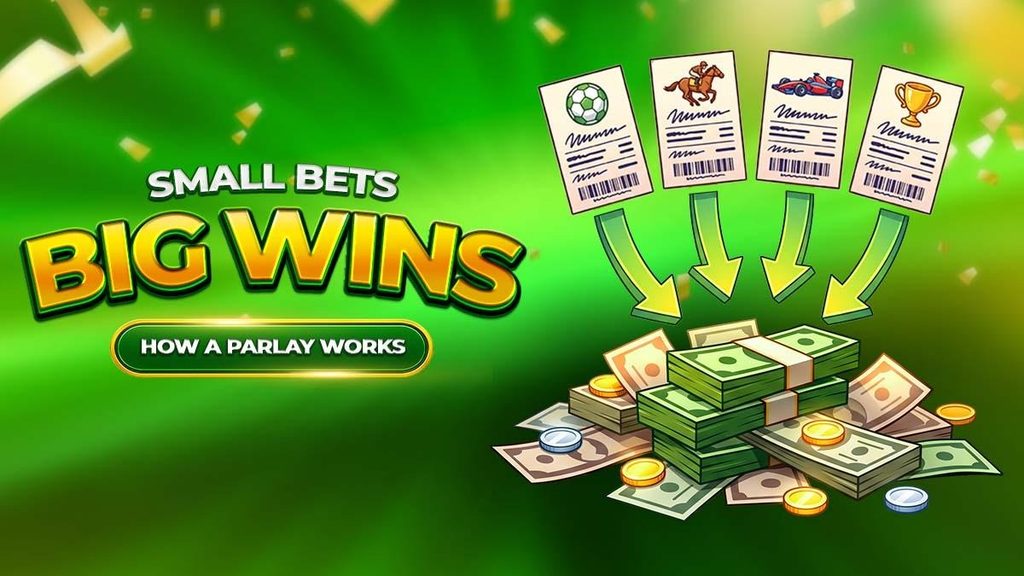
Say you like a favorite to win by knockout on tonight’s boxing card, and you also like a separate fighter to win their bout on the same event. Placed separately, those are two straight bets. Combine them onto one ticket instead, and you’ve built a parlay: a single bet made of two or more picks, called legs, where every leg has to win for the ticket to pay out.
Miss on just one fighter, and the whole ticket loses, even if the other one wins clean. That’s the trade behind every parlay: a bigger potential payout in exchange for needing everything to go right at once, with no partial credit for getting most of the card right. It’s also one of the most commonly placed bet types on any combat sports card, precisely because a modest stake can turn into a much larger number by the time the main event ends.
Want to follow along with tonight’s actual card? Check today’s fight card lines on UnliBets.
How a Parlay Payout Works
Here’s the math using that same two-fight card. Say your first fighter is priced at 1.75 in decimal odds, and your second fighter is also priced at 1.75 in their own bout. Multiply the two together (1.75 × 1.75 = 3.0625) to get your parlay’s combined odds.
On a ₱100 stake, that 3.0625 multiplier returns ₱306.25 total, meaning ₱206.25 in profit if both fighters win. Bet them separately instead, and a ₱100 stake on each would only return ₱175 total per winning fighter, no multiplication effect.
If odds notation itself is unfamiliar, our guide on how to read sports odds covers decimal, American, and fractional formats in full.
Add a third fight to the card at that same 1.75 price and the multiplier climbs to 5.36, turning that ₱100 stake into ₱536. A fourth pushes it past ₱938. The number grows fast on a stacked card. So does the list of fighters who all have to win.
See how this looks on the actual fight card by browsing today’s matchups on UnliBets.
Types of Parlays
Once the basic mechanic clicks, the variations are just different ways of choosing what goes into the legs.
Same-fight parlay. Instead of spreading legs across different bouts, you combine multiple bets from a single fight: say, a fighter to win and the fight to end inside a certain round. Sportsbooks price these carefully since outcomes in the same fight often move together, covered in more detail below.
Teaser. Lets you shift a posted number, like a round total, in your favor on every leg, in exchange for a smaller payout than a standard parlay.
Round robin. Splits your picks from a full card into every possible smaller combination instead of one all-or-nothing ticket, trading some payout ceiling for less all-or-nothing risk.
Parlay card. A fixed-format card, sometimes used for pooled contests, where the matchups and numbers are already printed and you just pick winners against them.
Whichever type you build, each individual leg works the way we cover in moneyline vs. point spread betting.
Some sportsbooks also offer an expanded same-card parlay product, sometimes labeled SGP+ or similar, that lets you combine legs from one fight with legs from a different fight on the same slip. It’s the same underlying multiplication as a standard parlay, just with more flexibility in what gets mixed together.
Correlated Parlays: Why Some Combos Aren’t Allowed
Two outcomes are correlated when one winning makes the other more likely too. Say you wanted to parlay a fighter to win with that same fight ending by knockout. Those aren’t independent outcomes: a knockout win makes an early, decisive finish more likely by definition, and vice versa.
Multiplying the odds of two correlated outcomes the way a standard parlay does would overstate the real combined probability, since normal parlay pricing assumes each leg is independent of the others. Sportsbooks handle this by blocking certain combinations outright, or pricing them through a dedicated same-fight parlay product built specifically to account for that correlation, usually less generously than naive multiplication would suggest.
The same logic shows up in team sports too. A basketball team to win big and their star player to score above a certain total are correlated in exactly the same way, so a boxing card and a basketball slate share the identical underlying rule, priced by the same underlying logic, even though the two sports look nothing alike on the surface.
What Happens If a Fight Gets Postponed or Pulled From the Card
Combat sports cards change more than most other sports, whether from an injury in camp or a fighter missing weight. If a bout in your parlay gets postponed or pulled from the card entirely before it happens, sportsbooks generally void that leg rather than counting it as a loss, then reprice the rest of your parlay using their own odds.
If a fight is only delayed within the same event, say pushed later on the same card, and still happens, the original leg typically still stands as placed. A leg pulled from the card entirely before the event, on the other hand, gets voided outright rather than delayed. Always check a specific sportsbook’s own rules here, since exact handling varies by platform.
Common Parlay Mistakes on a Combat Sports Card
Stacking every fight on the card into one ticket. A loaded pay-per-view with eight or nine bouts looks tempting to parlay in full, but the realistic chance of picking every single fight correctly is often in the single digits.
Not accounting for correlation within a single fight. As covered above, combining a fighter’s win with the specific method or round of that same fight either isn’t allowed or gets repriced against you.
Treating parlays as the main way to bet fight cards. The house edge runs meaningfully higher on parlays than on straight bets, so leaning on them as a primary approach works against you across a full year of cards, not just occasionally.
Skipping the odds comparison across platforms. The same fight can carry slightly different odds depending on where you look. A leg priced worse than it needs to be quietly drags down your combined parlay odds.
Picking fighters to chase a specific big number. Working backward from an exciting total payout, then filling in whichever fighters get you there, is a different process than picking each fighter because you actually believe in the matchup. Build the parlay from fighters you’d bet on their own merit, and let the payout be whatever it ends up being.
Ignoring weight-cut and injury news right before fight night. Combat sports cards shift more right up until fight time than most other sports. A missed weight cut, a late injury replacement, or a scratched fighter can change a leg’s odds significantly in the hours before the event, so checking the card again close to first fight matters more here than it would for a scheduled game days out.
Why Combat Sports Parlays Stay Popular Despite the Math
If the odds favor the house more on parlays than on straight bets, why do so many bettors build them on fight night anyway? Part of it is entertainment value. A ₱100 stake that could turn into ₱500 or more across a loaded card gives you something to follow through every bout, not just the main event.
There’s also a lottery-ticket dynamic: a small, affordable stake with a large ceiling feels different from risking that same amount on one fighter with a modest, predictable payout, even when the straight bet is the mathematically steadier long-term play. Neither reason makes a parlay a good primary strategy for following combat sports. It just explains why they remain one of the most commonly placed bet types on a stacked card, night after night, regardless of how the last one settled.
Parlay vs. Straight Bet: A Side-by-Side Look
A straight bet on one fighter at 1.75 decimal odds turns a ₱100 stake into ₱175 total if they win, needing only that one result. A 2-fighter parlay at those same odds turns that same ₱100 into ₱306.25, nearly double the reward, but now both fighters need to win instead of one.
Neither approach is wrong. A straight bet suits someone who wants a realistic, repeatable shot at a modest profit across a fight season. A parlay suits someone who’s fine trading a lower hit rate for an occasional bigger number on a card with several fighters they like.
Extend the comparison to a 4-fighter parlay at that same 1.75 price and a ₱100 stake can turn into over ₱900, a payout no single straight bet at those odds could realistically offer, at the cost of needing four separate fighters to all win on the same card. Someone chasing that ceiling accepts a much lower hit rate in exchange for it, which is a legitimate choice as long as it’s a deliberate one rather than an accident of how exciting the number looked.
Tracking Your Combat Sports Parlays Over Time
A single parlay result, win or lose, tells you very little about whether building parlays is working out for you. Keep a simple log of every parlay you place across a fight season: the fighters involved, the odds, the stake, and the result. Judged over 20 or 30 tickets rather than one loaded card, the pattern becomes far clearer than any single fight night could show.
This ties directly into bankroll management: sizing each parlay as a small, consistent unit of your total bankroll makes that season-long tracking meaningful, instead of one oversized ticket swinging the whole log by itself.
A card that produces a big hit is memorable precisely because it’s rare. A quiet log of small, consistent losses across a dozen cards is far less memorable, but far more representative of what parlays actually do to a bankroll over time. Tracking every result, not just the ones worth talking about, is the only way to see that pattern clearly.
What Counts as a Leg?
A leg is any single selection you add to the parlay, whether that’s a fighter to win, a method of victory, a round total, or an over/under on fight duration. Two picks from the same fight can both be legs of the same parlay, subject to the correlation restrictions covered above, and picks from entirely different fights or even different sports can sit on the same ticket without restriction, since unrelated fights can’t influence each other’s outcome.
It’s worth keeping that distinction straight before building a ticket: legs from unrelated fights multiply cleanly, while legs from the same fight get reviewed for correlation first, and sometimes priced differently as a result.
How to Actually Build One on a Fight Card
Pick your first fighter the way you would for any straight bet, and add that selection to your bet slip instead of confirming it right away. Then find your second fighter from a different bout and add that to the same slip. Most sportsbook apps automatically combine two or more selections into a parlay and show you the combined odds before you confirm anything.
Check that combined number against what you expected, enter your stake, and confirm. On a loaded card with several fights in one night, it’s easy to add a bout you didn’t mean to include, so a quick review of the slip before confirming is worth the extra few seconds. On mobile specifically, the bet slip usually lives behind a small icon that only appears once you’ve added at least one selection.
The Risk: Why All Legs Must Win
A parlay isn’t a strategy for improving your odds of winning money. It’s a way of trading a higher probability of a smaller win for a lower probability of a larger one. If each fighter individually has a 50% chance of winning, two fighters together only have a 25% chance of both winning (0.5 × 0.5). A third drops it to 12.5%, and a fourth to 6.25%.
New Jersey’s Division of Gaming Enforcement data (as reported by Establish The Run) showed sportsbooks in that regulated US market held 19.9% on parlay bets in January 2024, compared to roughly 4-5% on standard straight bets, close to five times the house edge. The underlying math applies to any card, in any market.
One practical wrinkle: if a fight in your parlay ends in a no-contest or gets ruled a draw, most sportsbooks void that leg and reprice the parlay rather than voiding the whole ticket, similar to how a push is handled on other sports.
“Same Risk, Bigger Reward” Isn’t Quite Right
It’s tempting to think of a parlay as the same risk as a straight bet, just scaled up for a bigger reward. That framing misses what’s actually happening. Every fighter added to the ticket multiplies the payout and divides the win probability at the same time, in opposite directions. That’s the entire reason a parlay carries a structurally higher house edge than a straight bet, not just a bigger version of the identical risk profile.
The 19.9% figure cited above isn’t a penalty for betting parlays specifically. It’s the mathematical result of stacking win requirements on top of each other, the same result you’d get on any sport, any platform, any market, whenever independent probabilities get multiplied together instead of evaluated one at a time.
FAQ
Can I mix boxing and MMA in the same parlay? Yes. Most sportsbooks let you combine picks across different combat sports and even different sports entirely on a single ticket.
What happens if a fight ends in a draw or no-contest? Most sportsbooks void that leg and recalculate your payout using the odds of your remaining legs, rather than voiding the whole ticket.
How many fighters can I include in one parlay? Sportsbooks generally allow anywhere from 2 up to a much higher cap. Every added leg lowers your probability of winning, so most experienced bettors keep parlays short.
Can I cash out a fight-card parlay early? Some sportsbooks offer a cash-out option that lets you settle a parlay early, usually at a reduced payout compared to letting the rest of the card play out.
Is a 2-fighter parlay safer than a 5-fighter parlay? Yes. A 2-fighter parlay needs fewer results to go right. A 5-fighter parlay pays out far more if it hits, but the probability of all five winning is dramatically lower.
Should a beginner start with combat sports parlays? Starting with 2 legs at most, until the mechanics and the risk both feel intuitive, is a more defensible approach than building a full-card parlay on a first attempt.
Can I edit a parlay after placing it? No. Once a parlay is confirmed, the legs are locked in. If you want different fighters, you’ll need to let that ticket play out and build a new one for your next card.
Does the order I add fighters to the slip matter? No. Whether a fighter is added first or last, the combined odds multiply the same way regardless of the order the legs went onto the slip.
That’s the full picture for combat sports specifically: the math, the correlation rules, the postponement handling, and the mistakes worth avoiding on a stacked card. Applying it to any specific fight card from here is just a matter of picking fighters you’d genuinely back on their own.
Ready to Build Your Own Parlay?
Check out today’s fight card lines and build your parlay on UnliBets